A World of Expression
Our Approach
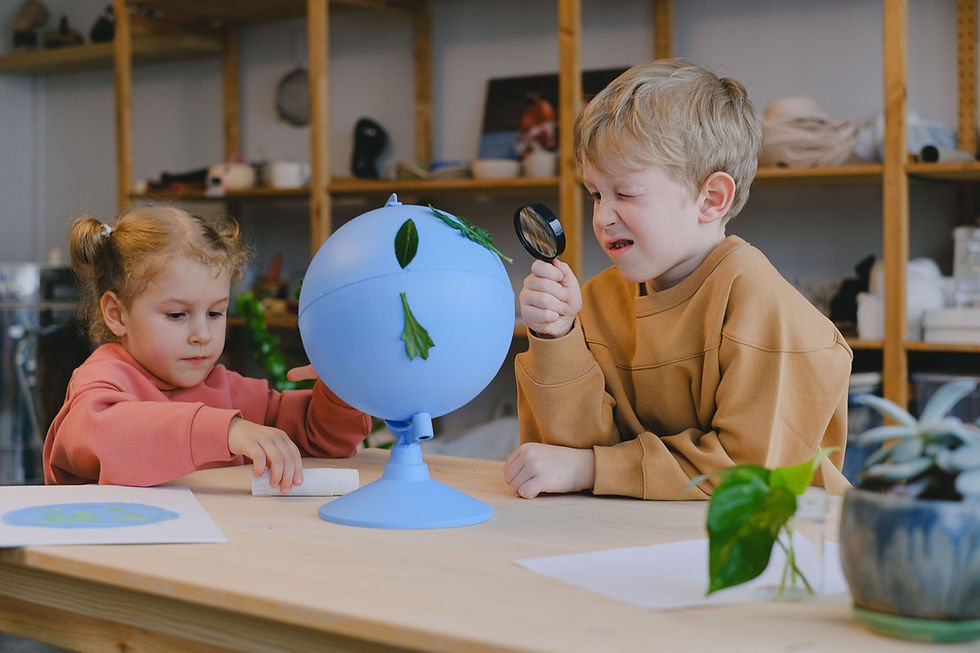
Our philosophy is driven by the Reggio Emilia approach, viewing children as capable, curious, and rich with potential. Instead of following rigid lessons, learning is shaped through hands-on exploration and meaningful projects inspired by children's own interests. To bring this to life, our educators combine an Inquiry-Based Learning mindset with a trilingual framework, creating an immersive environment where children ask big questions, collaborate, and naturally absorb languages.

Central to our practice is honoring the "100 Languages of Children."
We recognize that children think, feel, and express their understanding far beyond words alone—communicating through drawing, building, movement, music, drama, and countless other forms. By valuing these infinite possibilities of expression, we ensure every child can explore ideas deeply and share their unique voice authentically.
Our Reggio-Inspired Practices
Guided by the Reggio Emilia philosophy, we believe children communicate their thoughts in countless creative ways. We enrich this journey through an immersive trilingual foundation, enabling young minds to investigate their world, think critically, and articulate their discoveries fluidly across three languages.

100 Languages
of Children
Children express themselves in many different ways, such as drawing, building, movement, storytelling, and imaginative play. By providing a variety of materials and creative opportunities, we encourage multiple forms of expression. that celebrates each child's unique voice while building their confidence to communicate their ideas, thoughts, and feelings.

Inquiry-Based Learning
Inquiry-based learning encourages children to ask questions, explore ideas, test their theories, and reflect on what they discover. Rather than providing immediate answers, we support ongoing exploration through conversations, hands-on experiences, and thoughtful guidance. This approach nurtures curiosity, resilience, critical thinking and problem-solving skills

The Environment as the Third Teacher
Alongside parents and educators, the physical environment is recognised as the third teacher in a child’s learning journey. Thoughtfully designed spaces inspire curiosity, invite exploration, and encourage active engagement in learning. Children learn through experience by interacting with their environment, building independence, confidence, and resilience.
Benefits of Reggio Emilia for Children
The Reggio Emilia approach supports children’s growth in ways that extend beyond academic preparation. By focusing on inquiry, relationships, and meaningful experiences, it nurtures well-rounded development during the early years.